Arshan and Tunka Valley

Important notice: Before traveling to Russia, install a VPN to access apps like Instagram, YouTube, Telegram and WhatsApp. However, please note that our website may not load properly when a VPN is active — disable it while browsing our site. We also recommend downloading offline maps, as mobile internet can be unreliable outside major cities.

Arshan and Tunka Valley

Nilova Pustyn resort

In the East Sayans, 265 kilometers from Irkutsk, at an altitude of 915 meters above sea level, in the gorge of the Uhe-Ugun River, an eco balneal resort of Nilova Desert is hiding from crowds of holidaymakers. Its radon springs cure bones, joints, skin, and nervous system.
And rumours about healing waters reached the ears of V.Y. Rupert – Governor-General of Eastern Siberia. In the late 1830s, he instructed the Turan Border Patrol unit to study the area next to the springs. In 1840, a commission consisting of a medical inspector Sorochinsky of Irkutsk Medical Board and a pharmacist Mr Kulau conducted researches of the water composition to determine its medical properties. Radon springs which contain a large amount of silicon acid and fluoride were deemed unfit for drinking but very good for health as baths.

Arshan is a small resort village at the foot of the Eastern Sayan Mountains, in the Tunka Valley of the Republic of Buryatia. It is best known for its mineral springs, a short walk to a series of waterfalls on the Kyngarga River, and the Buddhist datsan in the nearby Holy Valley. The Tunka Valley has hot springs, sacred places, an extinct volcano field and a solar radio telescope, so it works as a one-day trip from Irkutsk or a longer stay.

Arshan and Tunka Valley at a glance

  • 📍 Where: Tunka Valley, Buryat Republic, about 210 km from Irkutsk. Arshan is also reachable from Ulan-Ude, but the trip from Irkutsk is roughly half as long
  • 🚗 Travel time: about 3–4 hours by road from Irkutsk
  • ♨️ Best for: hot springs, an easy waterfall walk, Buddhist culture, mountain scenery
  • 🗓 Season: all year. By late September the mountain tops carry the first snow against the autumn colors of the valley; winter is good for soaking in open-air hot pools
  • 🎫 Permit: a visitor permit for Tunkinsky National Park is required (see below)

Join our Arshan tour: a real fairy tale awaits you on our one-day tour to Arshan: mountain views, a walk to the waterfalls and hot springs, with a stop at the Zhemchug pools.

About the Tunka Valley

The Tunka Valley is about 200 km long and is an extension of the Baikal rift. To the west it is bounded by the high Eastern Sayan Mountains, which rise to about 2,500 m from the flat meadows, and to the east by the gentler Khamar-Daban range. The valley has hundreds of mineral springs, and each one differs in temperature, mineral content, taste and the amount of carbon dioxide and radon in the water. In the middle part of the valley, the Irkut River flows calmly between steep banks, forming loops, old channels and sandy beaches.

People have lived here for thousands of years, and the valley is full of legends. One says that Genghis Khan and his army once passed along the Irkut. Many places in the valley are sacred to Buryats, and some are hundreds of years old.

Arshan is the best-known village in the valley. In Buryat, arshan means “healing spring.” Russian settlers learned about the springs in the 19th century, and by the end of that century the village already had dozens of houses and summer cottages for visitors. 

Attractions of Arshan and the Tunka Valley

💧 Kyngarga waterfalls

There are seven mineral water outlets in Arshan itself. Near the village, the mountain river Kyngarga runs through a picturesque marble canyon, and a hiking trail follows its left bank. Kyngarga means “drum” in Buryat, and the river is loud enough to earn the name. There are 12 small waterfalls on the river, 3 to 7 m high. The first and most visited is about 1.5 km from the resort. The second is a wide cascade of rocky steps, reached by a narrow path that climbs another 300 m. You can keep hiking upriver to the others.

The trail runs through Tunkinsky National Park, so you need a permit, which you can also buy at the ranger post on the trail.

🛕 Khoimor Buddhist datsan

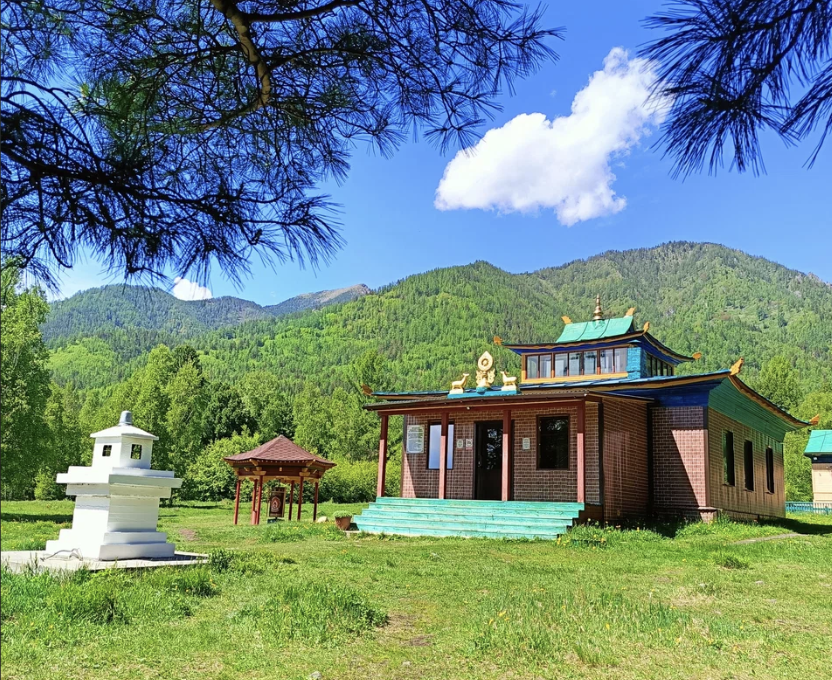
The Khoimor datsan stands in the Holy Valley near Arshan. It was first built in 1917 and restored in 1991. Its tradition includes a rite of worship to Genghis Khan. Cedars grow around the temple, and visitors make wishes beside them.

Arshan also has an Orthodox church of Saints Peter and Paul, built in 1915 and destroyed later in the 20th century.

♨️ Zhemchug hot springs

Zhemchug is a balneological area on the banks of the Irkut River, a short drive along the valley from Arshan (roughly 30–40 minutes). Its warm mineral water comes from a borehole drilled in the 1950s, and the open-air pools stay open in winter, when bathing in falling snow is part of the appeal. Expect to pay a few hundred rubles for a pool or bath, with sessions limited by time. Bring a swimsuit, a towel and rubber slippers. The water has long been used in balneotherapy, but it is not a medical treatment, so ask a doctor if you have a health condition.

🧘 Visit to a shaman

Shamanism is one of the oldest religious traditions in the world and was revived across Siberia from the mid-1980s, including in the Tunka Valley. Buryats believe a shaman has a special connection with the world of spirits. You can add a guided visit to a local shaman to the one-day tour to Arshan, ask questions and take part in a ritual.

🏔 Nilova Pustyn resort

Nilova Pustyn is an eco resort in the Eastern Sayan Mountains, about 260 km from Irkutsk at 915 m above sea level, in the gorge of the Yukhe-Ugun River. Its radon springs are used in bath treatments for joints, skin and the nervous system. Local authorities began to study the springs in the 1830s, and a commission tested the water in 1840. The hermitage was later named after St Nil of Stolobny, and the resort kept the name Nilova Pustyn (“Nil’s Hermitage”).
🛕 Burkhan Baabai datsan

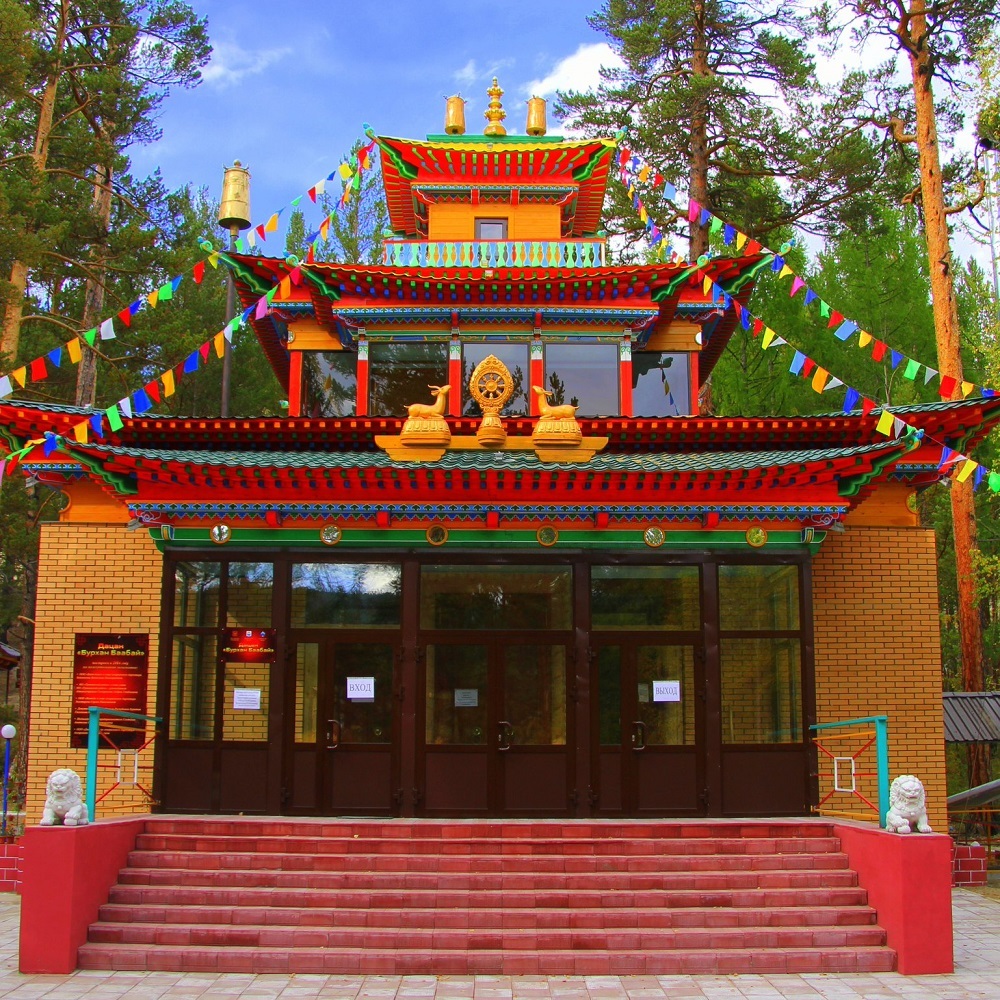
Another Buddhist shrine stands about 4 km from Nilova Pustyn in dense forest at the foot of Mount Sagaan Khairkhan. Burkhan Baabai means “White Sand” in Buryat, after patches of white quartz sand on the mountain slopes. A legend says the hero Shargai-Noyon came down from the sky on a grey horse and that the horse’s hooves dug out the white sand. The sand is thought to work as a talisman for soldiers and defenders.

Today, the site is recognized as a unique historical, religious, and cultural monument within the Tunka National Park . A datsan (Buddhist temple) now stands at the foot of the sacred hill, and each day at 11 a.m. lamas conduct prayer services dedicated to Burkhan Baabai and the protector deities . 

🌋 Valley of Volcanoes

The Valley of Volcanoes lies deep in the Khi-Gol area, where traces of volcanic activity are well preserved. A Buryat legend says the dormant volcano tops are what remains of a palace that the hero Geser set on fire with a burning arrow. Frozen lava stretches for about 70 km across the plains of Khi-Gol and Zhom-Bolok. Two old volcanoes, Kropotkin and Peretolchin, stand in the middle of the lava field. They are truncated cones that look small next to the surrounding mountains, but are impressive close up. The valley is remote and is usually visited with a guide and an off-road vehicle.

🔭 Badary Radio Astronomy Observatory

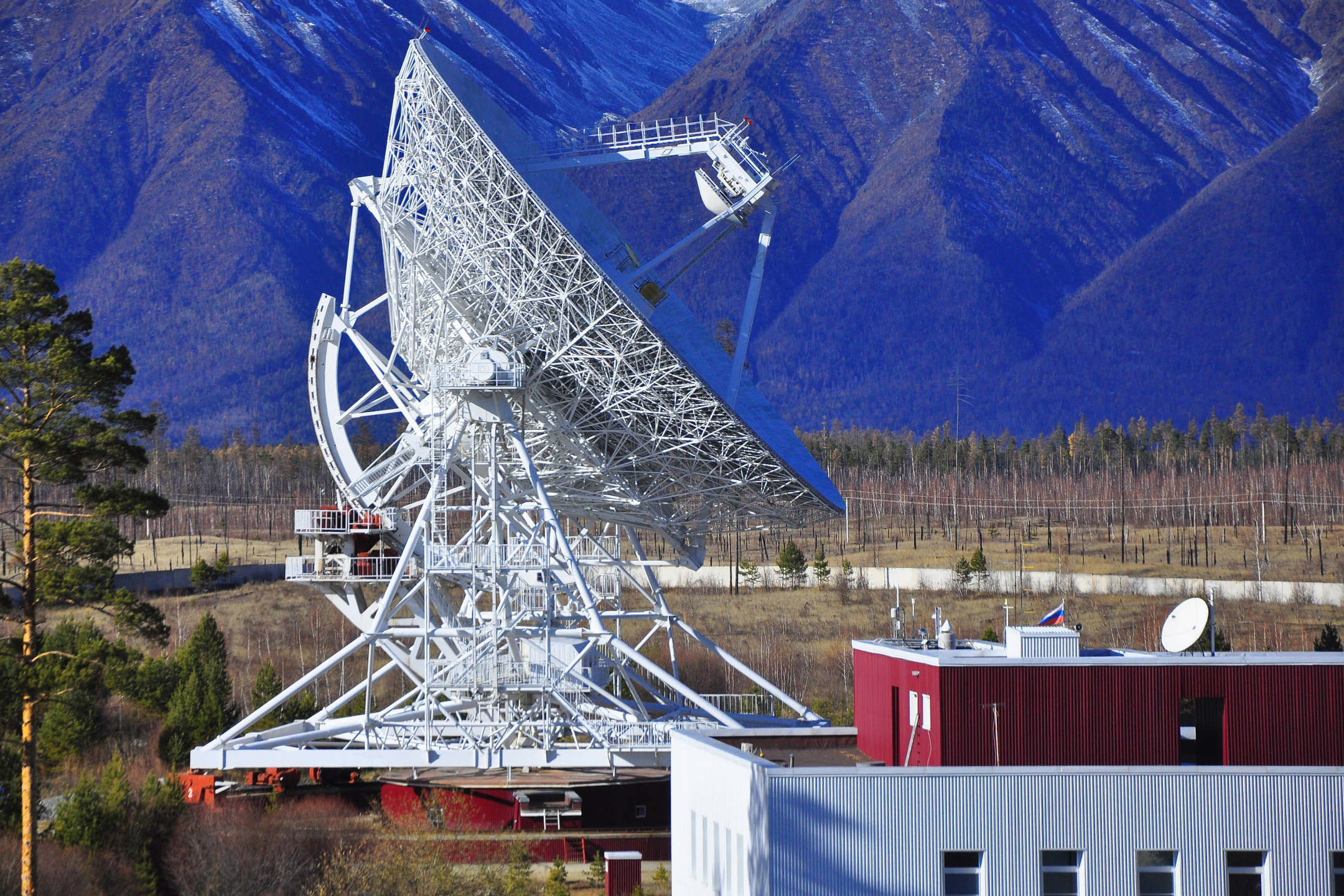
The observatory is in the Badary area of Tunka District, about 220 km from Irkutsk. It was put into trial operation in 1984 and belongs to the Institute of Solar-Terrestrial Physics of the Siberian Branch of the Russian Academy of Sciences. Its main instrument is the Siberian Solar Radio Telescope, a cross-shaped interferometer with two lines of 128 parabolic antennas, each 2.5 m across. Locals call it “Sunny.”

The second facility next door is a radio astronomy observatory that locals call “Leningradka.” It is part of a network of three observatories run by the Institute of Applied Astronomy in St Petersburg, which is why it has that nickname. Together they form a very-long-baseline radio interferometer (the “Quasar” network) used to study distant space objects. Both sites are working research facilities, so arrange any visit in advance.

Permits and border zone

Visitors to Tunkinsky National Park need a tourist permit. You can buy it online at visit.tunkapark.ru or at the ranger posts. Some remote parts of the Tunka area lie in the Russian border zone, and foreign citizens need a special pass for those areas, which takes about a month to arrange. Check your route with the park administration or your tour operator before you book.

How to get to Arshan

By car. From Irkutsk, take the Baikal road (R-258) to Kultuk, about 100 km, then continue on the A-333 highway along the Tunka Valley to Arshan. The whole trip takes about 3–4 hours.

By bus. Buses run from Irkutsk via Kultuk. Arshan has its own bus station (“Sayany”), and Zhemchug has a stop on the highway. Services on the last leg to Arshan run in the daytime, so check the schedule and book on the Irkutsk Bus Station online service before you travel.

The simplest way is our one-day tour to Arshan, which includes transfers and entry fees.

Frequently asked questions

  • How far is Arshan from Irkutsk?
    About 210 km, or 3–4 hours by road.
  • Can I visit Arshan in one day from Irkutsk?
    Yes. A long day trip covers the waterfall walk and the hot springs. Overnight stays give you more time for the datsans and the wider valley.
  • Do I need a permit for Arshan?
    Yes, for Tunkinsky National Park, including the waterfall trail. 
  • Are the hot springs open in winter?
    Yes, the Zhemchug pools are open all year, and winter is popular. Hours and prices vary, so check before you go.
  • Is Arshan in the border zone?
    Parts of Tunkinsky National Park do lie in the border zone, and foreign citizens need an advance pass for those areas. Ask the park administration or your tour operator whether your route is affected before you book.

    Prices and timetables change, so please check the official websites before you travel.

Didn’t find a suitable tour?

Check out the full list of the most interesting tours in Russian cities.

Book the tour

✓

Thank you!

The form was sent successfully. We will contact you shortly.